LINDA BERGER: Hard Facts From the Fiction Department

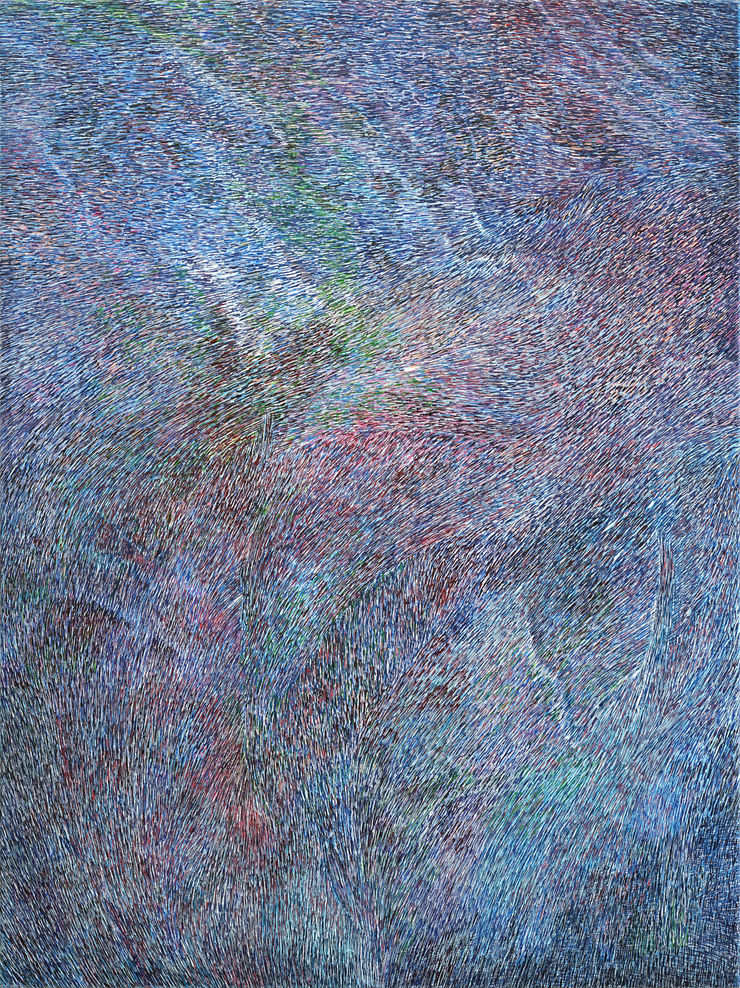
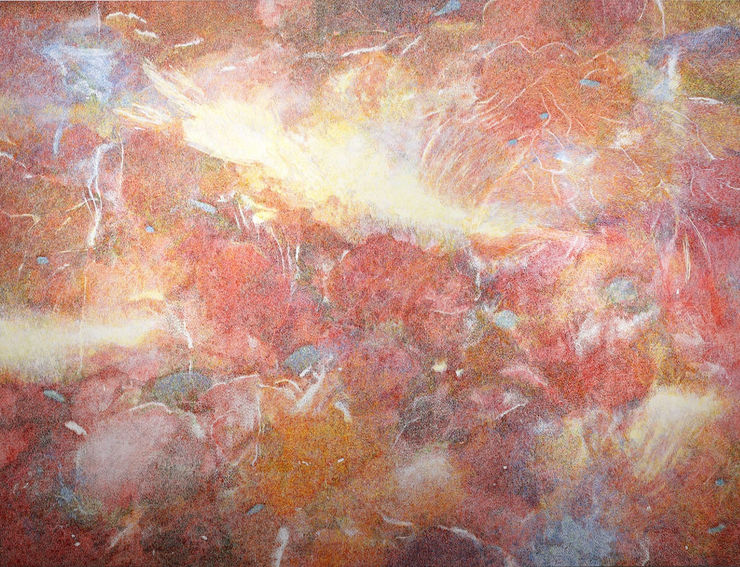
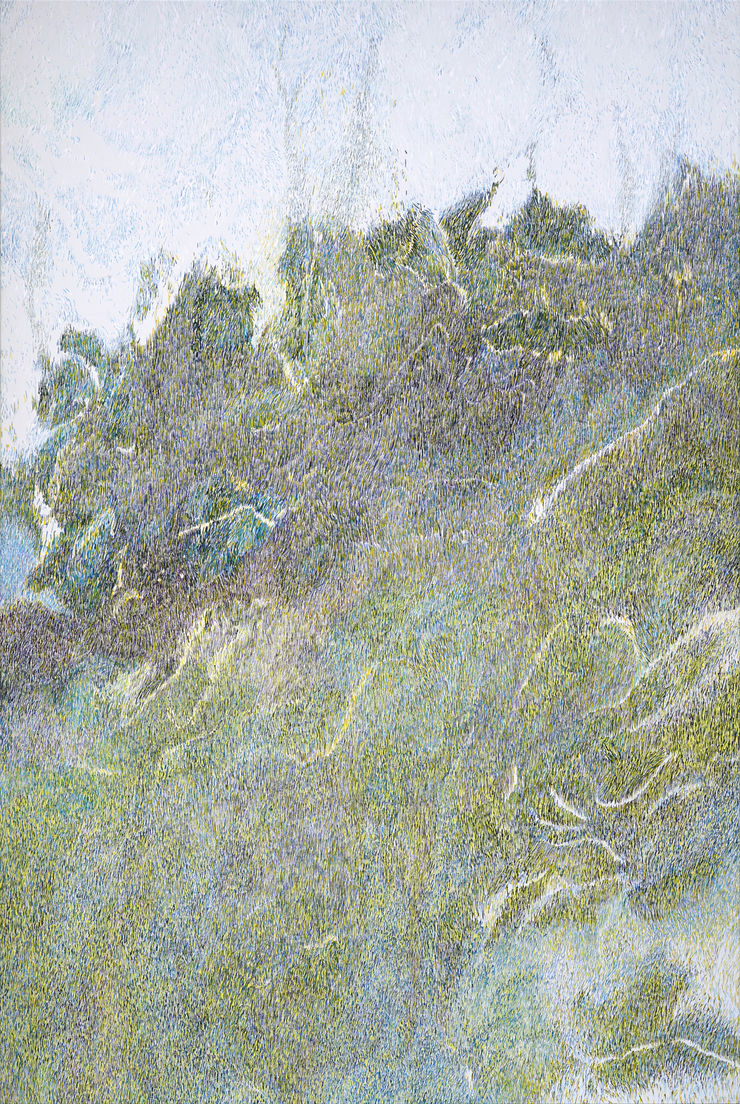
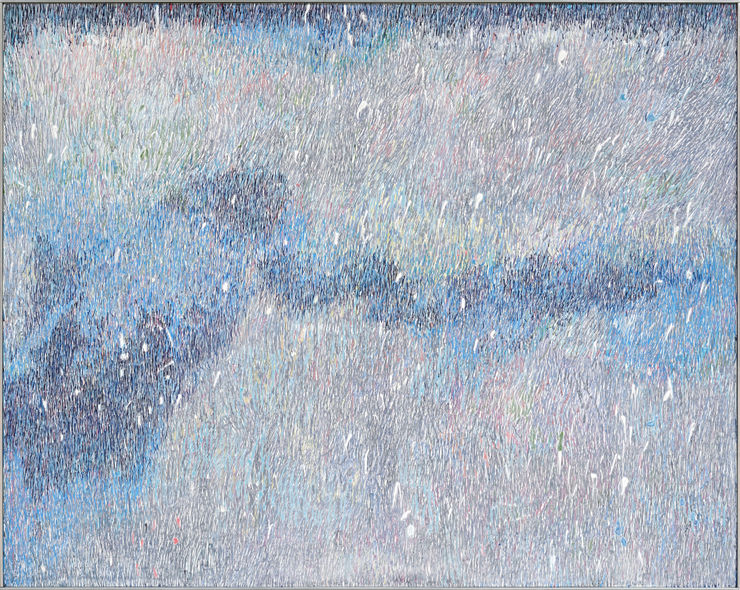
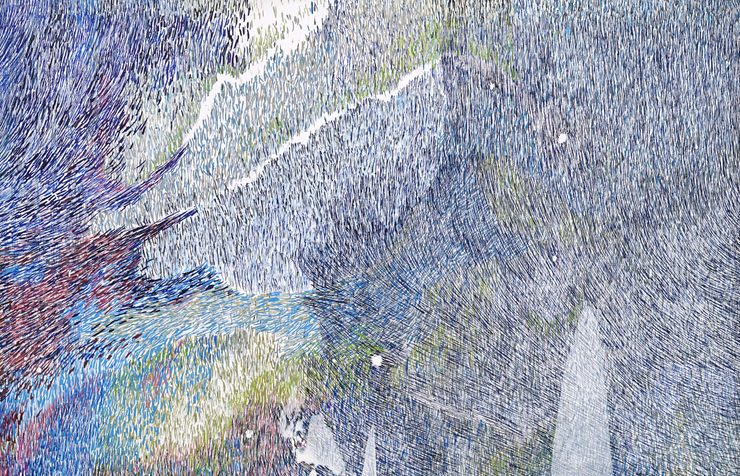
My technique consists of applying countless pen strokes in a repetitive, almost meditative manner, in order to create a vibrant, organic surface. I use short, often vertical lines made with ink and a dip pen. For me, this is the simplest way to produce a powerful mark. At the beginning of the drawing process, I establish a sense of position. I start by making initial emotional and physical experiences with the pen on the canvas, without any concept or reference. I find it difficult to explain how this works - it feels as though I am still trying to figure out how to draw. It unfolds like a conversation between the canvas and myself. Then a process begins in which one must accept that there are inherently many risks, and that things are very likely not to go according to plan - and that is a truly good and essential part of the process. It is almost impossible to imagine how much a drawing changes over the course of its creation. When embarking on a kind of journey with one's work, it is impossible to know at the beginning where one will end up, and nothing is learned if one tries to reach the end from the very start. So I have to be willing to fail within the process. The drawing must simmer; it must struggle. I struggle against it. Within me arises a desire to destroy, and this leads to layer upon layer being drawn over one another. It is a constant back and forth. The handling of color is just as important. I mix all colors myself from standard drawing inks and rarely use them in their pure form. Instead, tones are layered and blended to create a dynamic, ever-changing palette. The colors chase one another. It is essential to continuously challenge the surface. In the process, a monotonous scratching sound emerges, interrupted only by the repeated dipping of the pen into the ink. This description may sound fast-paced, but in reality it takes an extremely long time for a work to be completed - usually months, sometimes even a year. I attempt to make our complex reality comprehensible. Just as a mathematician communicates through formulas, equations, and hypotheses, I try to draw an outcome of this understanding through my work. When you look very closely at the canvas, the strokes reveal a complexity in which each individual mark contributes to a larger, cohe sive whole. This method of layering and building up the surface reflects the accumulation of thoughts and experiences in the human mind, emphasizing the interweaving of individual moments into a comprehensive, complex inner landscape. It is deeply about sensation and the feeling of the present moment. And then there is the question of when a drawing is finis hed. If one goes just a step too far, the drawing is often lost. The moments just before com pletion can mean its destruction. But if one does not take this small risk, the work usually remains in a space that is not good enough. It requires that which almost destroys it in order to complete it - and that is precisely what is mysterious about it. At a certain point in the life of a drawing, I begin to step back - it is as though I disappear in the end, and it is the work that lives. Somewhere, the surface must contain something I long for, even though at the beginning I do not yet know what I am searching for. One must there fore be capable of recognizing the unexpected. Through the repetition of my strokes, I create my own cosmos - one that is, for me, both beautiful and overwhelming. The most wonderful thing is that I can keep drawing endlessly; there is no reason to stop. In this way, a dynamic emerges somewhere between meditation and a self-constructed prison. For me, the most interesting part is simply allowing the work to arise from desire and from the process itself, with all of its complications.
- Linda Berger


-

-
-
-
-
-
-
Linda BergerHitherto, 2026Ink on canvas51 x 56 x 3,5 cmSold
-
-
-
Linda BergerMousetrap Replica, 2026Ink on canvas65 x 100 x 1,5 cmSold
-
Linda BergerThe Hourglass, 2026Ink on canvas200 x 195 x 1,5 cmSold
-
Linda BergerStar Fitness, 2024Ink on canvas80 x 60 cmSold
-
Linda BergerThe Future Of An Illusion, 2024Tusche auf Leinwand80 x 60 cmSold
-
-
-
-
-
-
-
-
-
-
-
-